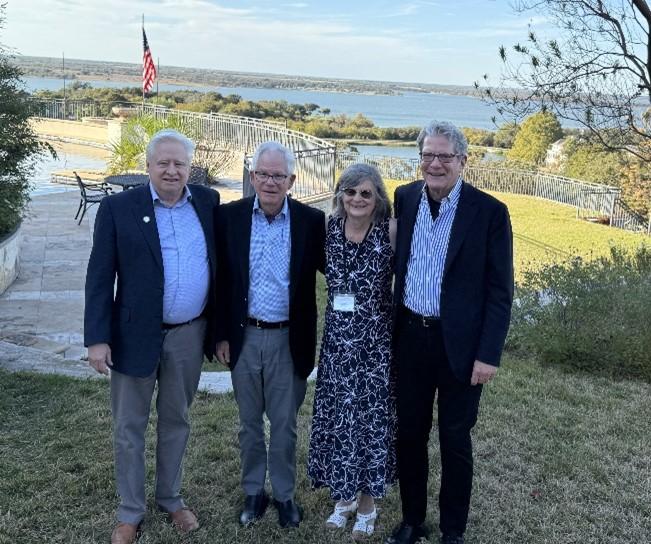
Inaugural Conference of the Alexander Hamilton Institute-Waco Discusses “The Political Science of Herbert J. Storing”
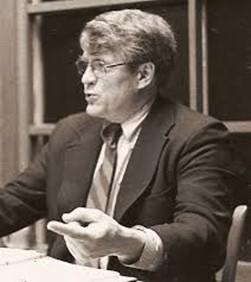
The annual David and Mary Conference on the Great Books was held in Waco, Texas on November 14 and 15, 2025, devoted to the work of American political scientist Herbert J. Storing.
The conference was organized by AHI-Waco’s President, Timothy Burns. AHI-Waco is the offshoot of the Alexander Hamilton Institute for the Study of Western Civilization, located in Clinton, New York, which for many years had joined Baylor’s Political Science Department in sponsoring an annual conference for Baylor graduate students and alums in political science and for friends and guests of the AHI.
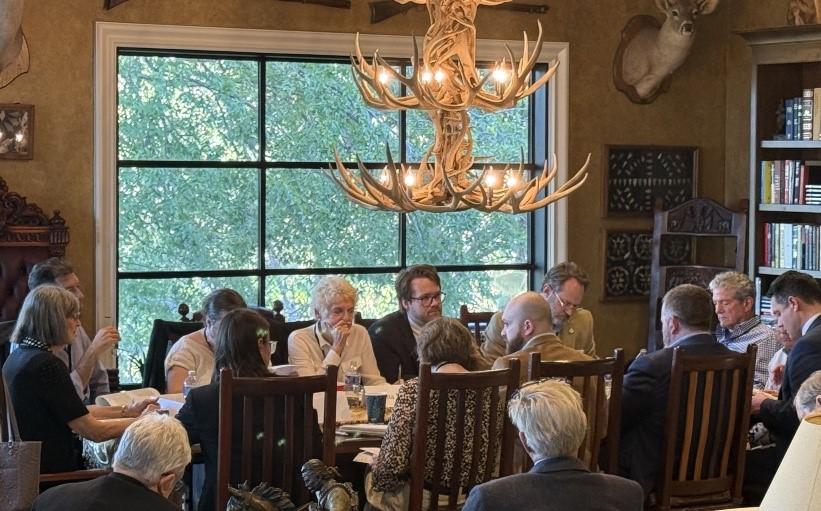
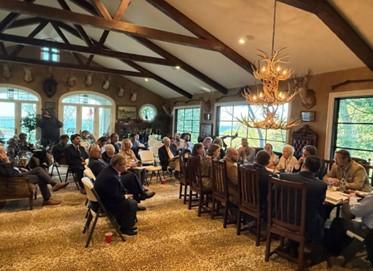
This year’s conference, held at the lovely home of Clifton Robinson on Lake Waco, had over forty attendees, including graduate students from Baylor’s Departments of Political Science, English, and History. PhD alums returned from the University of Texas (San Antonio), Utah Valley State University, Angelo State University, and St. Vincent’s College to participate in the discussions. The other members of AHI-Waco’s Board of Directors, David Clinton and Mary Nichols, were also in attendance, as were Storing’s former students Ann and Christopher Colmo, Michael Maibach, and Martha Martini, Brad Wilson, and Storing’s daughter, Susan Benfield. David and Mary Nichols, who organized the AHI conferences for many years, also studied with Storing.
Discussion leaders for this year’s conference were William A. Schambra, whose career in government and philanthropy included directing the Bradley Center for Philanthropy and Civic Renewal, and Jeffrey Salmon, who held several senior positions in the Department of Energy, the Office of Science, and Office of Secretary of Defense. Both did graduate work with Herbert Storing in the 1970s.
Herbert Storing is most known for his work on American Founding, the Anti-Federalists (The Complete Anti-Federalist, in 7 volumes, 1981), African-American political thought (What Country Have I? Political Writings of Black Americans, 1970), public administration, and statesmanship. His work on the Constitutional Convention of 1787, and on the arguments between the Federalists and Anti-Federalists during the Ratification Debate, offers a framework for understanding American politics and the principles that animate it, as they were subsequently contested, defended, and clarified in the course of American history.
While Storing demonstrates the greatness of the Founders’ achievement in producing and gaining acceptance of the US Constitution, he also insists that their work is incomplete. He argues that the Anti-Federalist concern with the character of the people in a polity devoted to protecting individual rights echoes throughout our history. Slavery in particular calls into question the moral foundations of the American republic, as do the many voices of black political thinkers who provide different answers to the question articulated by Frederick Douglass, “What Country Have I?” It is a question, Storing argues, for all Americans and should prompt them to reflect on their country and their obligations as American citizens, to reflect on and strengthen its core political principles.
Storing further explores the virtues required for the maintenance of a republic devoted to liberty in his essays on bureaucracy and administration. He finds echoes of Anti-Federalist concerns in criticisms of big government and articulates in response the possibility of administrative statesmanship. The qualities that bureaucrats develop in executing the tasks of their office, Storing argues, entitle them to the discretion that is inevitable in administration. Its principled discretion and judgment reflect that exercised in statesmanship at its highest level, which Storing argues is a potential of the American Presidency as established by the Constitution. The President is “a creature of the Constitution,” but that Constitution does not merely limit his actions within a system of checks and balances but is also “spacious” enough to allow him to fulfill the multiple tasks it assigns to him. Storing demonstrates statesmanship at its best not only in the Founding but in the “dialogue” between Federick Douglass and Abraham Lincoln.
The last essay discussed at the conference, Storing’s “American Statesmanship: Old and New,” seeks to rehabilitate an older concept of statesmanship found in prudent and just deeds, as an alternative to scientific bureaucratic management and populism. His essays on the American Founders, the Anti-Federalists, black political thinkers, and Lincoln offer reflection on such statesmanship.
We are grateful to many generous contributors who made this conference possible, including Robert Paquette, President and Executive Director of the Alexander Hamilton Institute for the Study of Western Civilization; Benjamin Kleinerman (and the Jack Miller Center), R.W. Morrison Professor of Political Science at Baylor University; and Connor Price, Merrill Lynch, Vice President, Financial Advisor (Baylor Political Science 2020).
AHI-Waco also is deeply grateful to Clifton Robinson, who made his home available for the conference. All discussions and meals were there, with the exception of the last dinner on Saturday evening at the Nichols’ home, followed by music and singing around a campfire.